Decolonizing Social Work Circle in the Nordic Summer University
I am excited to be coordinating a Nordic study circle on decolonizing social work on 9-10 May 2022 at the University of Helsinki. The circle is an opportunity to participate in a caring, critical discussion of social justice issues and professional practice with students, community members, service users, academics, knowledge keepers, and practitioners in a safe environment of guided self-care and trust. We invite academics, practitioners, community members, knowledge keepers, students, and other interested people to join us at in this study circle to collaboratively practice community-centered, trusting, and transparent conversations on what decolonizing social work could mean in a Nordic setting. The circle is funded by the Nordic Summer School: an independent, academic institution, which organizes symposia that draws international participants across disciplines in the Nordic and Baltic regions.
The event will take place in person and there are limited spaces (sign up is via email to kris.clarke@helsinki.fi). Further information is available here
DRAFT PROGRAM – SUBJECT TO CHANGE
Nordic Circle – Decolonizing Social Work
9-10 May 2022
University of Helsinki, Finland
Kris Clarke, PhD, Associate Professor, organizer (kris.clarke@helsinki.fi)
Organizing committee
Coordinator: Kris Clarke, PhD (University of Helsinki)
University of Malmö, Sweden
Michael Wallengren Lynch, Ph.D, Lecturer, Social Work
University of East Anglia, UK
Ann Anka, Associate Professor in Social Work,
University of Sussex, UK
Henglien Lisa Chen, Ph.D, Senior Lecturer, Social Work
Sapir College, Israel
Einav Segev, Ph.D, Senior Lecturer, School of Social Work
Nuzha Allassad Alhuzail, Ph.D, Senior Lecturer, School of Social Work,
Flinders University, Australia
Luke Cantley (key contact), College Education, Psychology and Social Work, Flinders University
Dr Michelle Jones, College Education, Psychology and Social Work, Flinders University
Dr Carmela Bastian, College Education, Psychology and Social Work, Flinders University
9 May 2022
8.00-9.30 Welcome to the land - Indigenous opening streamed in from Flinders University, Australia (takes place outside) Facilitators: Luke Cantley,
Dr Michelle Jones, Dr Carmela Bastian.
9.30-10.00 Break and travel to university premises
10.00-10.15 Opening meditation (Janet Park)
10.15- 11.00 Opening the discussion: exercises to move around in small groups brainstorming thoughts and feelings about how colonization has played a role in our lives. (Facilitators: Ann and Kris)
11.00-11.30 Debrief – talking circle (Facilitator: Lisa & Michael)
11.30-11.45 Break
11.45-13.00 Activity led by Helsinki PhD students
13.00-14.00 Lunch
14.00-16.00 Afternoon session: sharing on historical trauma and conflict (facilitated by Nuzha Allassad Alhuzail & Einav Segev who also share their work on conflict in Israel-Palestine)
16.00-16.30 Debrief – talking circle (Facilitators: Lisa and Michael)
10 May 2022
9.00-9.15 Opening meditation (Einav)
9.15-11.00 Session on remedying historical wrongs and the significance of social justice in our lives and work: Bedouin perspectives facilitated by Nuzha Allassad Alhuzail)
11.00-11.15 Break
11.15-12.00 Activity led by performance artist Janet Park
12.00-13.00 Discussion of text Confronting professional imperialism and moving towards integrative healing (by Clarke & Yellow Bird) in groups led by Lisa, Michael, Ann, & Kris
12.00-13.00 Lunch
13.00-15.00 Guided discussion on decolonizing social work: what could it mean and what directions should be future steps? Discussion of the three-year application. Led by Einav Segev & Kris Clarke (Reading: Le Grange: (Individual) Responsibility in decolonising the university curriculum & outline of application)
15.00-16.00 Final reflections – talking circle
The first presentation with the HIV project data
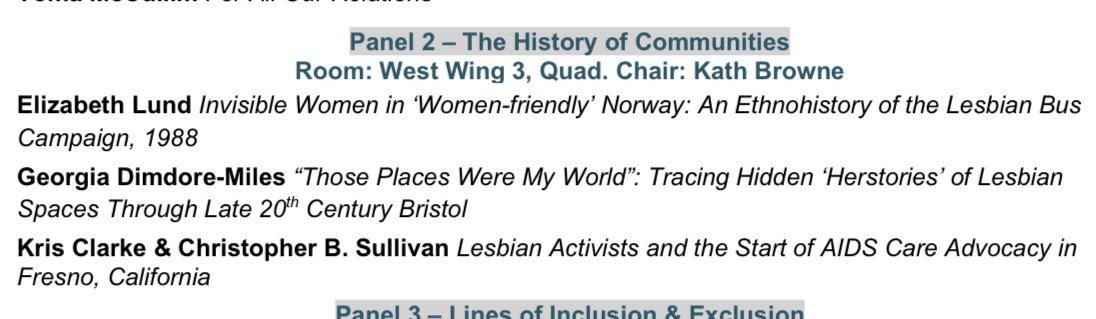
This week Dr Christopher Sullivan and I will be presenting some preliminary data about the founding of the Central Valley AIDS Team in the 1980s at the Lesbian Lives conference at University College Cork, Ireland. We are looking forward to good discussion and feedback on our presentation.

New article on decolonizing social work ancestry
The Social Work Routes Podcast has inspired me to think more about how to decolonize our single story narratives of social work history. This article explores how social work shapes its professional identity and ways of knowing by centering the role of canonical founders in the curriculum. The global social work origin story often centers on Anglo-American ancestors so one way of decolonizing social work ways of knowing could be to look to public history as a learning tool. The article concludes by discussing how podcasts like the Social Work Routes Podcast has the potential to decolonize the process of collecting, analyzing, and disseminating local knowledge of ancestors thus challenging the top-down approaches to knowing.
The article, Reimagining Social Work Ancestry: Toward Epistemic Decolonization, has just been published open access. It was a joy to work with the journal, Affilia: Feminist Inquiry in Social Work, which produces strong and critical research on a variety of topics in feminist inquiry in social work.

Book now open access
Decolonizing Pathways towards Integrative Healing in Social Work written by myself and Dr. Michael Yellow Bird is now available for free via the Taylor & Francis open access website here Decolonizing Pathways - we are delighted that this is available freely to the public.

The Social Work Routes Podcast is returning in October
The Social Work Routes Podcast is returning next month! We have a great line up of social workers, activists and other professionals talking about their pathways into social justice work. Check out #socialworkroutespodcast on Instagram where producer and PhD candidate Priscilla Osei will be featuring live interviews and reels. We always welcome suggestions for topics and people to interview.

Autumn brings more episodes
The winds and rain have come to Helsinki, making for a decidedly autumn feel. As the summer fades, the Social Work Routes Podcast is busy gearing up for a new fall lineup. In addition to our discussions on social justice work and social work, we are developing a special series on reflecting on the legacy of HIV/AIDS work forty years after the first scientific reports of an emerging disease. According to the World Health Organization, nearly 80 million people have been infected by HIV globally and 36 million have died of AIDS between 1980 and 2020. We look forward to discussions with a range of activists and experts from around the world to better understand the impact of the AIDS pandemic internationally, nationally, and personally.
We always look for suggestions for topics and participants so feel free to reach out to us with your ideas and comments!
Reflecting on 40 years since the first report of HIV
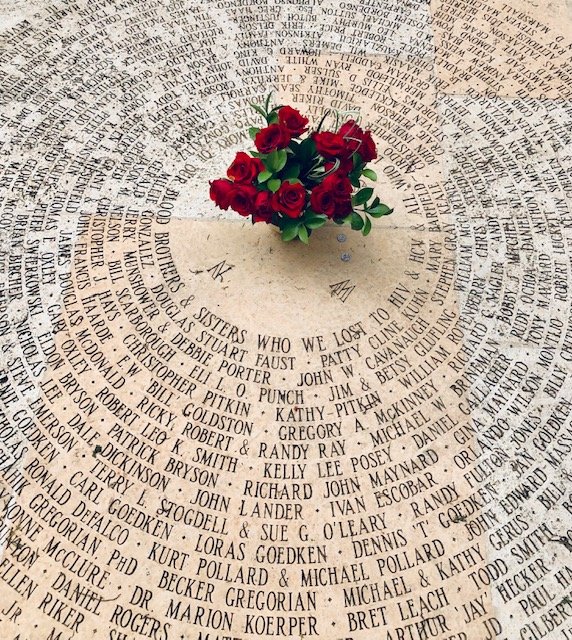
The National AIDS Grove, San Francisco, California
In June 1981, the Mortality and Morbidity Weekly Report by the Centers for Disease Control published an article that described cases of a rare lung disease in five young white men in Los Angeles who were previously healthy. A couple of months later, a New York City physician published a study of a cluster of Kaposi’s sarcoma in young men who did not fit the profile of the typical person diagnosed with the autoimmune condition. The World Health Organization (WHO) reported 36 cases of the unknown disease in Western Europe in 1981, mainly in France and Denmark. These were the first reports on what would become known as AIDS (acquired immune deficiency syndrome), though current research indicates that HIV (human immunodeficiency virus) was present on the African continent long before these reports.
The early years of the AIDS pandemic were marked by moral panic, shame and stigma which proved to be significant barriers to developing care and prevention. Community-led activism around the globe challenging the shame and discrimination that surrounded HIV/AIDS and fundamentally altered the relationship between the medical establishment and patients, the visibility and recognition of many social identities, and opened up new coalitions to promote prevention and empowerment. However, social class, citizenship, nationality, race, gender, sexual orientation continue to be significant factors in access to care. Dr. Cathy Cohen and Dr. Celeste Watkins-Hayes, for example, have written excellent books about the complexities of HIV in African American communities. The lesson of the AIDS pandemic, like COVID-19, is that we are in this together and unless we tackle the structural injustice that many communities face, we will have disparities in infection rates and care.
Since the start of the epidemic, around 78 million people have become infected with HIV and 39 million people have died of AIDS-related illnesses. According to UNAIDS, 37.6 people around the world were living with HIV in 2020. AIDS-related deaths have been reduced by 61% since the peak in 2004. Every week, around 5000 young women aged 15–24 years become infected with HIV. We still need education, anti-discrimination measures and tools for empowerment so that people have the ability to make safe decisions. Stigma and structural violence remain major barriers to prevention and care. Interventions must be culturally appropriate, based on science and rooted in the diversity of community. The battle is not over.
New HIV blog post for Nordic project
One of the best things about academic life is participating in discussions with interesting people that bring new perspectives on topics. The Joint Committee for Nordic Research Councils for the Humanities and the Social Sciences (NOS-HS) funds projects to host a series of multidisciplinary workshops on specific issues. A great strength of this model is that it brings people together from all of the Nordic countries to explore emerging ideas in new ways. Last December, I participated in the virtual workshop on Queering Family Violence: Setting the Agenda for Queer Wellbeing, which opened up new approaches to thinking about our HIV project.
This is the blog post I wrote with colleagues for the project.
Welcome to the new website
This is a relaunch of my website that combines a portfolio of my academic work along with episodes of The Social Work Routes Podcast. I am always interested in hearing from folks so if you have suggestions, questions or comments, please do not hesitate to reach out!